IBM Aspera for the Automotive Industry
IBM Aspera | Automotive
The car is now a data centre on wheels. And every one of them is phoning home.
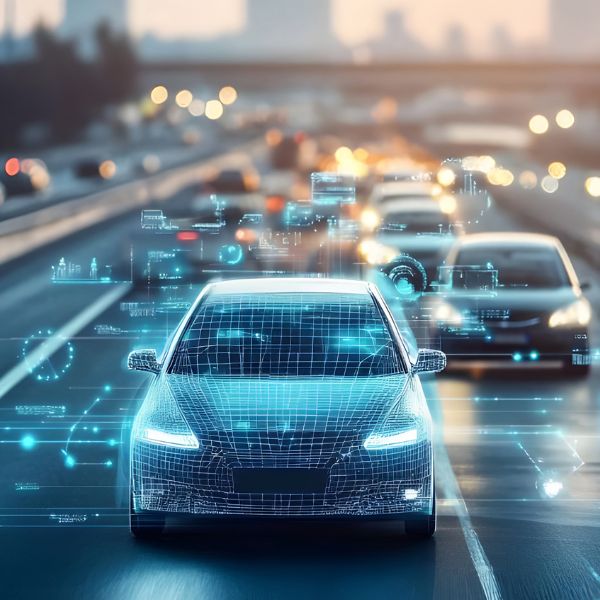
The modern vehicle generates more data than anyone planned for. Moving it is now part of building it.
A car used to be metal, rubber and a bit of wiring. Now it’s a rolling network of sensors, cameras, radar and software, generating terabytes a day in testing and never really going quiet once it’s on the road. Autonomous-driving development, ADAS validation, connected-vehicle telemetry, over-the-air updates – every one of them is a data-movement problem wearing an automotive badge. The engineering happens across global design centres, test tracks and suppliers, and the data has to keep up with all of them. The bottleneck isn’t building the car anymore. Increasingly, it’s moving what the car knows.
The data didn’t just grow. It changed shape.
Automotive data used to be manageable: design files, some simulation, test results. Then the vehicle became a sensor platform. A single day of autonomous-driving road testing can produce tens of terabytes of camera and LiDAR data, and that footage has to travel from the test fleet to the engineers who train the models on it – fast, because the development cycle won’t wait. Multiply that across global R&D sites, tier-one suppliers and validation partners, none of whom share a network, and the volume becomes staggering. The transfer tools most of the industry inherited were built for sending a design file, not for shifting a test fleet’s worth of sensor data across continents every night.
The pressure points hiding inside every programme.
Can the data keep up with the development cycle? If test data takes days to reach the engineers training on it, the whole autonomy programme moves at the speed of the transfer, not the speed of the work. Will it arrive whole? A corrupted sensor dataset isn’t a re-download, it can mean re-running an expensive test. Can suppliers and partners actually handle it? Automotive is a deeply collaborative chain, and the data has to reach networks you don’t control without falling over. And is it protected? Pre-release vehicle data and proprietary autonomy models are among the most valuable, and most targeted, IP in the industry.
An industry that obsesses over shaving milliseconds off a lap time still routinely loses days moving the data that would make the car faster.
The transfer backbone built for data at this scale.
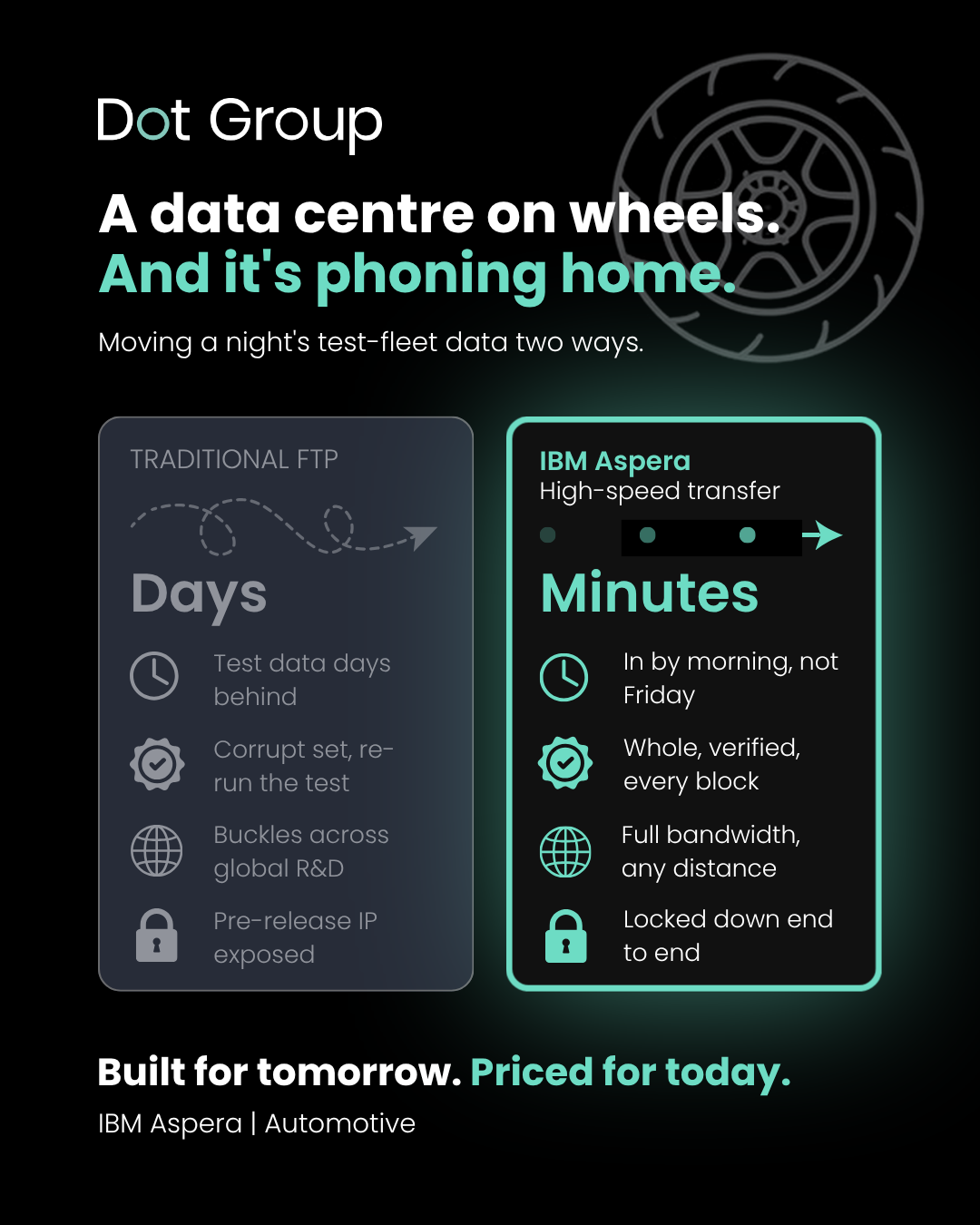
None of this is a new problem to the people who already solved it — the largest automotive manufacturers and their suppliers have moved engineering and test data this way for years. IBM Aspera’s patented FASP™ protocol uses the full available bandwidth whatever the file size, distance or network condition, so a night’s worth of test-fleet data reaches the engineers by morning rather than by the end of the week. Interrupted transfers resume from the point of failure, not the start, which matters when you’re moving tens of terabytes over a long link. And it’s encrypted in transit and at rest with integrity verification on every block, so proprietary models and pre-release data stay locked down end to end.
It used to be that only the largest manufacturers could justify moving data at this scale. The old volume-based pricing rose steeply as the terabytes mounted, and for the data volumes modern vehicles generate, that added up fast. That has changed. IBM has removed volume-based pricing, so the capability the global OEMs rely on is now within reach of the suppliers, specialists and engineering firms generating the very same data. Identical performance with the cost that once ruled it out simply gone.
The part that makes it production-grade.
Aspera is the capability; making it stand up to an automotive development programme is the craft. It has to integrate with the test-data pipelines, the global R&D infrastructure and the supplier connections an automotive operation already runs on. And keep performing as the data volumes climb with every new model. That’s where Dot Group comes in: designing the deployment to match how your programme actually works, embedding high-speed transfer into the tools your engineers already use, and supporting it as you scale. So the data never becomes the reason the car is late.
What's slowing your development cycle that shouldn't be?